





Learn all the elements of music below!
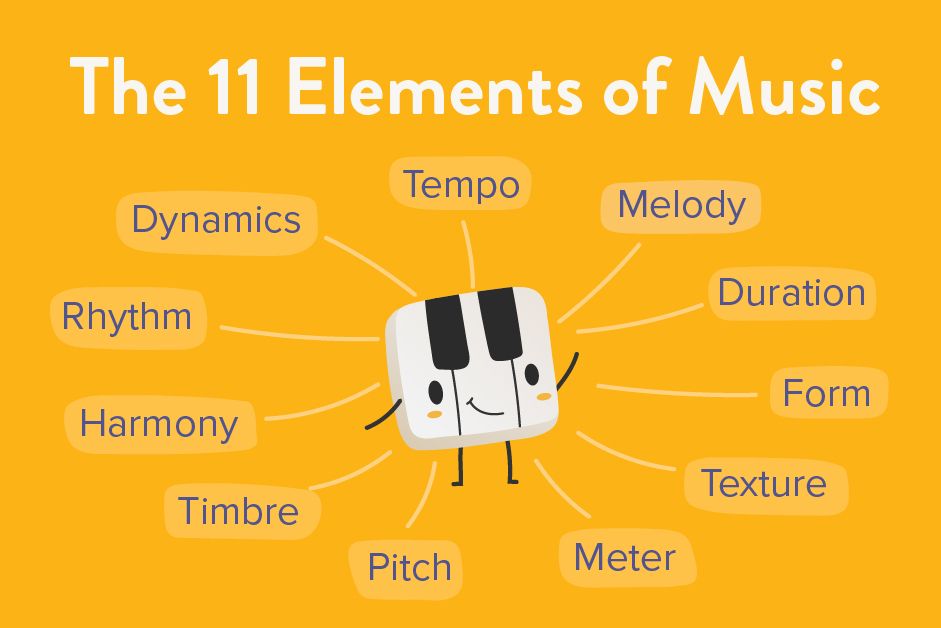
When a rhythm makes us want to tap our toes, or a tune gets stuck in our head, an element of music has moved us. In this article, we’ll talk about 11 elements of music: harmony, rhythm, texture, melody, timbre, dynamics, duration, pitch, tempo, meter, and form. For each element, you’ll find a definition, some examples, and a link for further reading. Use the table of contents below to click on an element of music and discover additional resources, worksheets, and guides.
To access hundreds of additional resources about the elements of music, including music theory worksheets, video instruction, and more, give Hoffman Academy Premium a try!
Table of Contents
Understanding the Basic Elements of Music
For musicians of any age, developing an understanding of the basic elements of music strengthens your appreciation of music as well as your playing skills. Understanding how to count a rhythm, or knowing that “allegro” means “play at a quick tempo” improves your musicality.
Dynamics
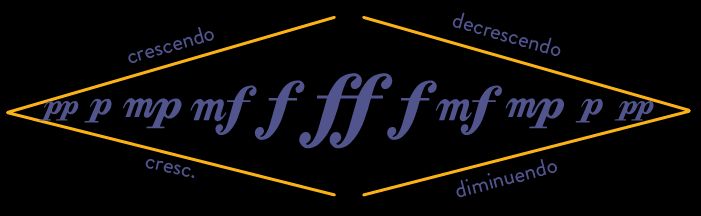
Both an element of music and an element of sound, dynamics indicate the volume at which a musician plays. In describing loud and soft sounds, dynamic changes affect the amplitude or level of pressure of a sound wave, which the listener experiences as a loud or soft sound. The element of dynamics gives musicians a way to add emotion and drama to music. In musical notation, a dynamic may be indicated by the Italian term or a musical symbol. As musicians, being able to ‘whisper’ or ‘yell’ musically helps us make our point.
The element of dynamics changes over time within a piece of music. A composer may indicate a crescendo, or an increase in volume, to create a sense of drama or emphasis. In contrast, a pianist might play a phrase while getting quieter, creating a decrescendo. Sometimes, a dynamic level changes on a single note, like a sforzando!
Learn to play dynamics with Hoffman Academy’s learning resources! Our Dynamics Reference Chart shows the musical symbol, the Italian term, and a definition for each dynamic level. Perfect for all beginner musicians and pianists, this guide creates an understanding of dynamic levels and how they change.
Duration
All music is made up of sound, and the basic qualities of a sound include amplitude (volume or dynamics), pitch (which we’ll talk about in a later section), and duration. Duration describes how long a sound lasts, whether the sound is a single note or an entire piece of music. While a sixteenth note’s duration may last for less than a second, an orchestra might play a symphony for more than an hour.
Hoffman Academy’s Rhythm Words Guide provides a great example of the connection between the duration of sound and rhythm.
Form
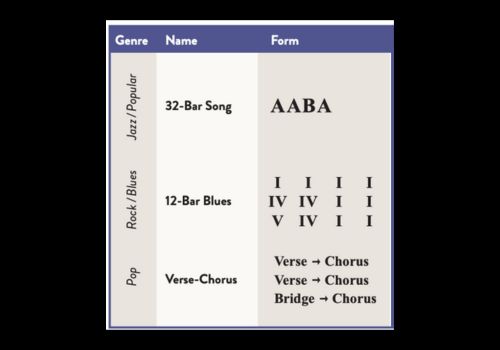
As an element of music, form describes the structure of a piece. Musicians talk about form because identifying the patterns in melodies, harmonies, and rhythms makes it easier to learn and memorize music. When you listen to a pop song on the radio and recognize a chorus, you’re experiencing the form of the music. Visit our article on “Form in Music“ to learn more about the most common forms in music, including: binary form, rondo form, strophic form, and ternary form.
This Musical Forms Guide provides a tool for musicians to identify musical forms. It’s a chronological chart of the most common musical forms used throughout Western history and includes concise graphics showing how each kind of piece is structured. With examples from the Baroque era to Pop music, you can listen to your favorite pieces and learn to identify the form using this guide.
Harmony
Harmony describes the element of music we experience when two or more notes are played at once. Harmony can originate from multiple notes played at the same time on a single instrument, like a chord on a piano, or on different instruments, like an orchestra playing a symphony. Musicians use music theory terms like intervals and chords to describe the type of harmony created when multiple notes play at the same time.
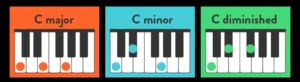
Strumming a chord on a guitar or playing a chord on piano creates an organized harmonic moment using certain intervals. In the Western musical tradition, we assign emotional experiences to some harmonies, like major and minor. Major chords possess a bright, happy sound because their lowest interval is a major third (four half-steps). To create the minor chord sound that some hear as sad, change the lowest interval to a minor third (three half-steps). To learn more about the building blocks of harmony, chord progressions, and more, read our comprehensive article on Harmony in Music.
Hoffman Academy’s extensive music chord resources, including the All Major and Minor Triads Guide, foster musical growth and harmonic understanding. For pianists playing jazz charts, pop, or gospel music, our Ultimate Piano Chord Chart includes more advanced harmonic notation, including seventh chords, suspensions, add2 chords, and more.
Melody
Melody is the most singable element of music! Melodies combine multiple elements: a sequence of notes, or pitches, and specific rhythms that create a distinct musical line. If you hum “Happy Birthday,” and change a rhythm or note, the melody changes.
In classical Western music, composers often take a melody and explore different versions of it in a form called “theme and variations.” Similarly, in jazz, musicians play the main melody from a lead sheet before improvising. In film music, certain characters have motifs, or personal melodies that you hear whenever that character is on the screen. To learn more about melody, read our article Melody in Music.

Meter
Meter in music describes the mathematical organization of beats in a measure. In musical notation, time signatures indicate the meter. The number written on top describes the number of beats in a measure, and the bottom number describes which type of note gets the beat. As an element of music, meter orders strong and weak beats within a measure and describes the way a beat can be subdivided.
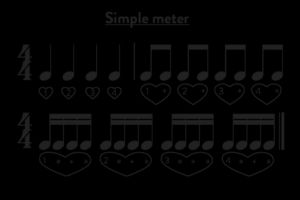
The two types of meter in Western music are simple meter, where each beat divides into multiples of two, and compound meter, where each beat divides into multiples of 3. For a more comprehensive understanding of meter, check out our article Meter in Music.
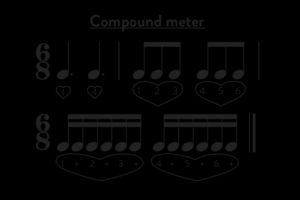
Hoffman Academy provides additional resources to help musicians learn the mathematics of meter through helpful diagrams and illustrations. This Compound Meter Guide includes the rhythms a musician would find in compound meters, such as 6/8 and 9/8. Hoffman Academy also offers a Simple Meter Guide to provide musicians with a reference for rhythms in meters like 4/4 and 2/4.
Pitch
Like duration, pitch is both an element of sound and an element of music. Pitch describes the frequency of a sound wave, or the number of times a sound pressure wave completes a cycle in a second. Each musical note has a specific pitch, or frequency of vibrations per second, measured in hertz (Hz). High notes have higher frequencies and low notes have lower frequencies.
When a pianist plays the highest note on the piano, C8, the string vibrates 4186 times in a second. The rapidly vibrating string disturbs air molecules, which then bump into other molecules, creating crowded high pressure and empty low pressure areas. When those compression and rarefaction waves in the air reach your ear, your eardrum vibrates and your brain interprets the sound as the note C8. For musicians working on the basics of reading note names, the Grand Staff Guide provides a one-page resource connecting musical notation to the notes on the keyboard.
Since sound originates from vibrations, it can travel through other materials, or mediums. This property of sound is why people can enjoy and compose music without the sense of hearing. Beethoven continued composing after losing his hearing by touching his piano. Similarly, Helen Keller’s letter describes her joy at “listening” to Beethoven’s 9th Symphony by placing her hand on the radio.
Rhythm
Rhythm is the musical element that drives us to move! We experience it as the pattern and timing of sounds and silences. From the rapid beating of our hearts when we run, to the slow pace we feel walking lazily on the beach, we are aware of the “beat,” or the pulse of our body’s natural rhythmic patterns.
In music, rhythm describes a pattern of duration of notes and silences. Different types of rhythmic patterns exist in music in the same way that walking, running, and skipping sound different. Some of the most common rhythmic patterns are regular rhythm, syncopation, polyrhythm, and free rhythm. Rhythm also connects to the musical element of tempo. A rhythm can be played quickly or slowly as the tempo changes and the pattern remains the same.
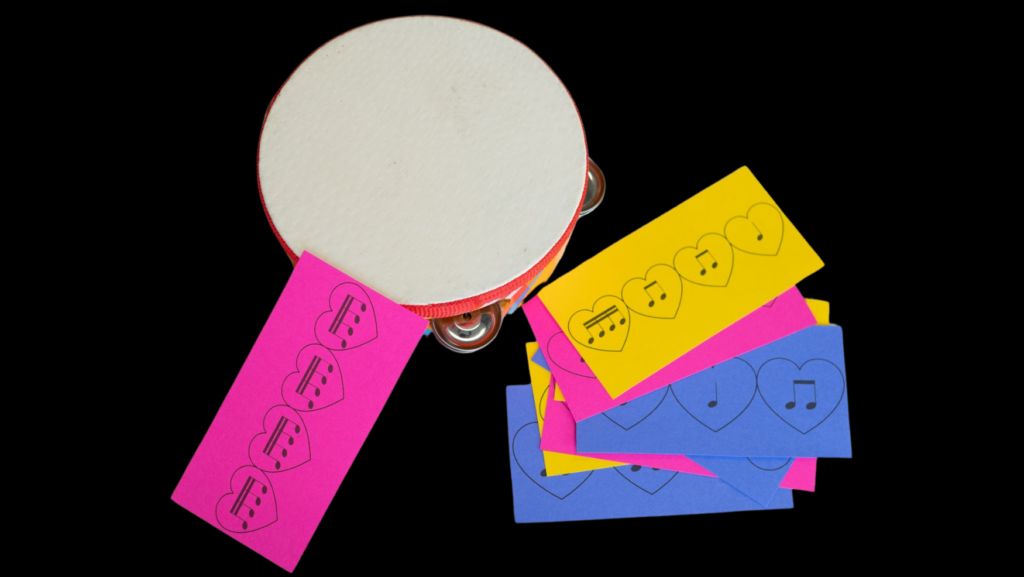
At Hoffman Academy, we offer additional resources to help students develop their ability to read rhythmic notation in sheet music while connecting to their sense of the beat. The Heartbeat Mat teaches rhythm to beginner students with intuitive and interactive cut-out cards and a mat to place them on. This tool connects the primal sense of rhythm – how we physically sense a beat – with the visual symbols of notes. Use the Rhythm Words Guide with the rhythm cards and the heartbeat mat to help build the physical association between the patterns of a rhythm we hear and speak and the way rhythms look. For more activities to help develop our innate sense of rhythm, check out Mr. Hoffman’s article What is Rhythm in Music?
Tempo
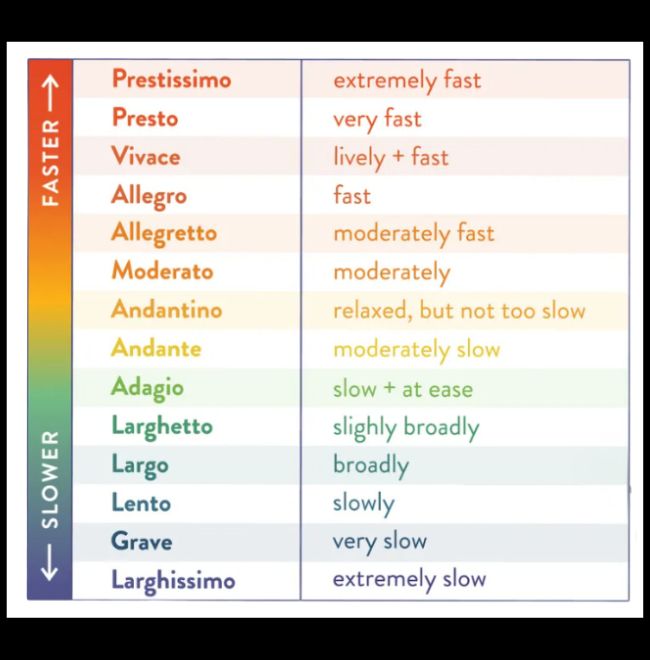
Tempo comes from the Italian word for ‘time,’ and this element of music deals with the speed of the beat. If rhythm is the “lub-DUB” of a heartbeat, tempo is the heart speeding up or slowing down. Tempo markings determine how fast or slow a piece of music is played. Another way to think of tempo might be like the pulse of the music. The same way that our heart speeds up when we run and beats more times, music moves faster in a quicker tempo. Measured in beats per minute (BPM), often the Italian term for a tempo covers a numerical range. Some common examples of tempo markings include: adagio, moderato, allegro, or presto. You can learn more by reading our article All About Tempo in Music.
For beginners wanting to memorize musical terms for tempos, this Tempo Reference Sheet associates the most common tempo markings with an animal known for its speed. For more advanced musical students, this Tempo Marking Chart includes the most common Italian tempo marking terms and is color-coded and organized from slow to fast.
Like the musical element of dynamics, tempos can adjust and shift throughout a piece. This Tempo Change Guide provides a quick reference for all tempo change words and symbols in music. Musicians will know when to speed up, slow down, or sustain a musical pulse using this chart, which includes definitions and markings such as a tempo, rubato, and piu mosso.
Texture
As an element of music, texture refers to the layers of notes that we hear in a piece. Texture can describe the relationship between a melody and harmony, or a combination of instruments layered together to create a piece of music. Texture might be described as simple or complex, sparse or dense, or smooth or rough. To learn more about the descriptions of texture, check out our article on Texture in Music.
In composition, musicians refer to four main textural types: monophony, homophony, polyphony, and heterophony. Many of our Western music pieces – from pop and rock to church hymns and Classical piano compositions – feature a homophonic texture, with a clear melody and harmony. When you learn to add chords to a piece instead of playing only the melody, you move from playing a monophonic texture to a homophonic texture! Polyphony, sometimes called counterpoint, can be heard in Renaissance and Baroque music, including piano pieces by J.S. Bach. Finally, heterophony uses two different instruments to play variations of one melody, and is most commonly heard in traditional Eastern music.
Timbre
The element of timbre (pronounced TAM-bur) in music describes the unique quality of the sound that a musical instrument makes. Timbre is also known as tone quality, tone color, or voice. Part of what makes up timbre are the higher frequency harmonics an instrument makes. The size, shape, and material of an instrument affect the harmonics, or overtones, that make up the unique sound. The way an instrument is played also affects the timbre. Tone colors change depending on whether sound is made by hitting a string, bowing a cross a string, buzzing a reed, or blowing into a mouthpiece. You can learn all about this element of music in our article on Timbre.
As pianists, we cannot change the timbre of a piano we are playing in the same way that a vocalist can alter the quality of their voice to sing in different vocal styles. With that said, every acoustic piano’s timbre is different because of the wood and its structural features. However, some prepared piano pieces let pianists access different qualities of sound from the piano by standing up to pluck the piano string instead of playing the keys. Look at all the different methods of getting sound out of the piano used in this video by the Piano Guys, including plucking, bowing, and tapping on the frame:
Explore the elements of music with Hoffman Academy
Thanks for exploring the elements of music with us, including harmony, rhythm, texture, melody, timbre, dynamics, pitch, tempo, meter, and form. We hope this collection of definitions, example terms, and musical element worksheets prepares you to make music confidently!